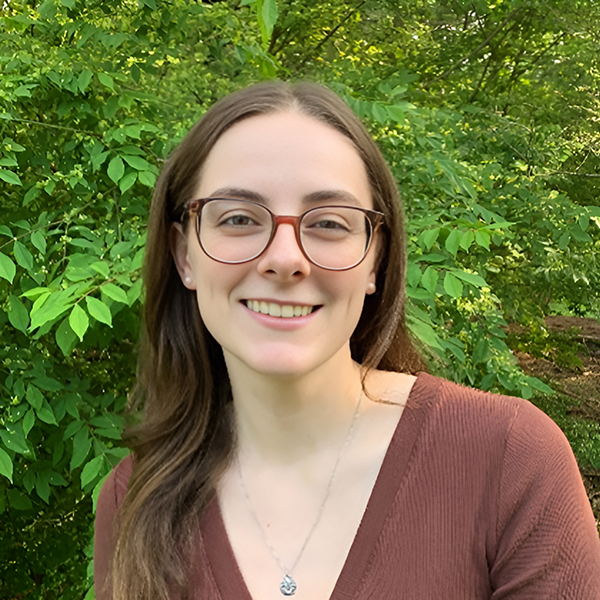
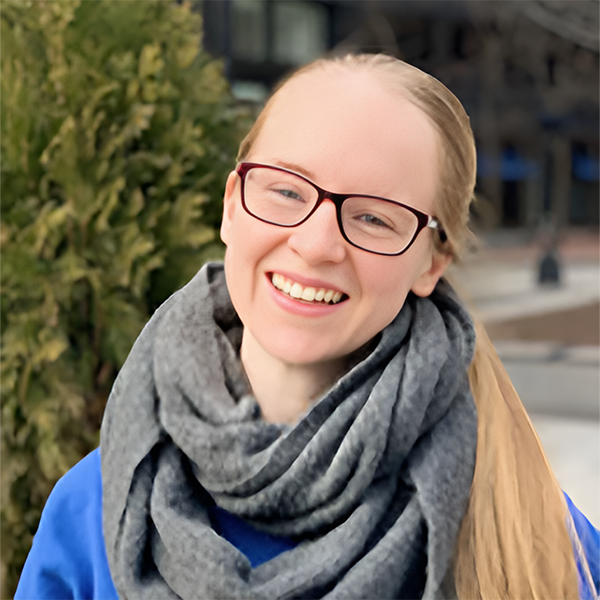
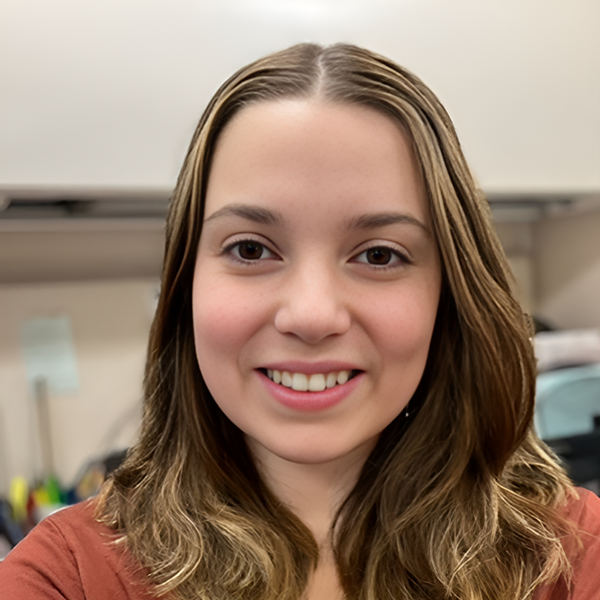
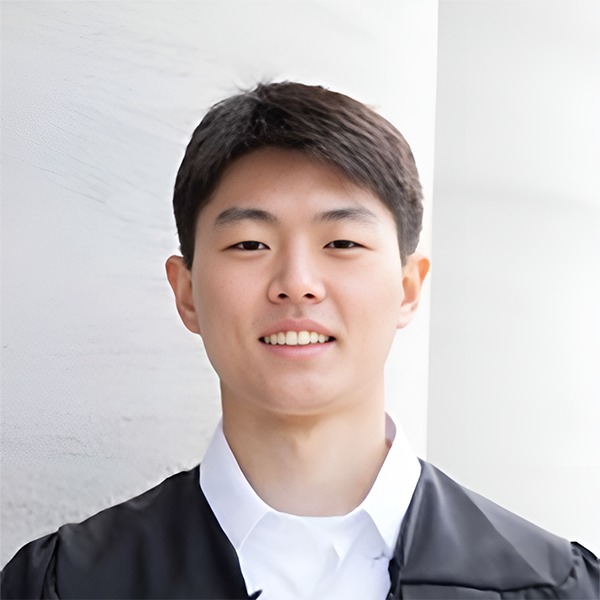
Genomics Cohort Training—2024-2025
Summer 2024
Students took a summer bridging course DSCC 162: Data Structures in Python with Andrea Cogliatti as preparation for their fall matriculation into the program.
Fall 2024
Students participated in 13 credits of coursework. During the first semester the students took the following courses:
- DSCC 462: Computational Introduction to Statistics, Professor Anson Kahng
- DSCC 461: Introduction to Databases, Professor Eustrat Zhupa
- DSCC 440: Data Mining, Professor Monika Polak
- IND 501: SMD Research Ethics, Professor Paul Kammermeier
A pre-program survey was done by Cathy Cerosaletti to assess the cohort’s understanding and experiences and competency with research, ethics, equity and inclusion, genomics and career development skills.
Students began to connect with mentors.
Winter 2025
A sequence of three extra-curricular, hands-on workshops aimed at building core competencies in genomic data analysis were offered by the Genomics Research Center (GRC) in conjunction with the Goergen Institute for Data Science GIDS-REM fellowship program, the Center for Integrated Research Computing (CIRC), and the Environmental Health Sciences. These workshops covered nine core competencies that are required for GIDS-REM fellows and were open to any researchers in the University of Rochester and Medical Center communities.
An introductory session on Monday, January 13 from 10 a.m.-3:30 p.m. by Professor Brendan Mort and staff of CIRC at the Vista Collaboratory in Carlson Library was required for those who needed Blue Hive access or basic knowledge of Linux clusters, running Jobs and Slurm, Modules, Software, and Jupyter.
The workshops were four hours each and led by John Ashton and staff of GRC:
- Tuesday, January 14: Bulk transcriptomics data processing & analysis
- Wednesday, January 15: Pathway & network analyses
- Thursday, January 16: Single-cell transcriptomics data processing & analysis. This workshop introduces single cell RNAseq and ATACseq data generation and analysis.
Spring 2025
Students returned to studies with 12 credits of coursework to take:
- DSCC 465: Introduction to Statistical Machine Learning, Professor Cantay Caliskan
- BST 434: Genomic Data Analysis, Professor Matthew McCall
- BIOL 453: Computational Biology, Professor Justin Fay
Mentor Meetings were used to start discussions about summer internship placements.
Summer 2025
Students engaged full-time in their lab’s research assignments. Professor Fay initiated the Summer Seminar series—a weekly venue to learn and engage in applied problems in genomics. The series included short presentations from students, trainees and faculty on current research problems with an emphasis on pragmatic solutions. Presentations were followed by a discussion to enhance practical understanding and assessment of genomics approaches, methods and computational analyses. The seminar series was run as part of the Goergen Institute for Data Science MS program in applied genomics and open to students and faculty interested in application of genomics and genome technologies to problems in biology.
The seminar series also included a professional development component for students in the GIDS-REM training program. For this component students learn and assess presentation strategies and research communication skills to enhance their career goals in either academics or industry.
Schedule
Session 1 | 06/04/25 | Introduction to the summer applied genomics seminar series Justin Fay, Professor, Department of Biology |
Session 2 | 06/11/25 | Multi-omics of aging Hongbo Liu, Assistant Professor, Department of Biomedical Genetics |
Session 3 | 06/18/25 | RNA folding stability Dave Mathews, Professor, Department of Biochemistry and Biophysics |
Session 4 | 06/25/25 | Cell trajectories and differential expression Ricardo Lopez Candelaria, Graduate student, Biostats and Computational Biology Program |
Session 5 | 07/02/25 | Evolution in replicate avian hybrid zones Maria Castano, Graduate student, Evolution, Ecology, Genetics, and Genomics Program |
Session 6 | 07/16/25 | AI literacy and research Dani Presgraves, Director, Data Science Training at The Jackson Laboratory |
Session 7 | 07/23/25 | Clinical genomics and epigenetics Bin Zhang, Associate Professor in the Department of Pathology & Laboratory Medicine |
Session 8 | 08/06/25 | Transcription and CpG islands McKayla Ford, Graduate student, Biomedical Genetics and Genomics Program |
Fall 2025
Students enrolled in:
- DSCC 483: Practicum Project, Professors Ajay Anand and Cantay Caliskan
- DSCC 457: Applied Genomics, Professor Amanda Larracuente
Presentations of summer research given during Meliora Weekend and the Fall Graduate Research Symposium.
Conference Travel
The cohort is considering attending one of the following conferences:
- National Diversity in STEM Conference for the Society for Advancement of Chicanos/Hispanics and Native Americans in Science (NDiSTEM SACNAS 2024)
- Annual Biomedical Research Conference for Minoritized Scientists (ABRCMS 2024)
- Cold Spring Harbor Laboratory (CSHL) Biological Data Science
Practicum Project
CellScapeXR: Virtual Reality Explorer for Spatial Gene Expression and Tissue Structure
Team Members: Evan Platten, Lydia Levesque, Mariah Nuzzo, Michael Seluanov
CellScapeXR is a virtual reality application designed to allow researchers and students to explore spatial gene expression and tissue structure in an immersive 3D environment. The project processed Visium spatial transcriptomics data using open-source Python tools, including SCANPY and Squidpy, applying dimensionality-reduction techniques (PCA, UMAP), clustering methods (Leiden), and normalization and batch-correction procedures. Processed results were integrated into a Unity-based 3D scene using custom C# scripts, enabling each data point to be linked to its tissue location and metadata. Additional analysis with STdeconvolve and Enrichr supported cell-type inference and heightmap generation to visualize layered tissue structures. The final prototype allows users to navigate UMAP point clouds, map points back to tissue locations, and explore cell-type distributions, demonstrating how immersive VR can make high-dimensional omics data more interpretable and accessible.
Evaluation of Cross-Sensitivity Alert (CSA) Suppression on Beta-Lactam Utilization
Team Members: Elijah Soh, Ludia Pack, Claire Kim
The goal of this project was to evaluate how removing beta-lactam cross-sensitivity alerts from the electronic health record (EHR) affected prescribing behavior and patient safety at the University of Rochester Medical Center. While these alerts were originally intended to prevent allergic reactions, emerging evidence suggests that most penicillin allergy labels are inaccurate and that true cross-reactivity among beta-lactam antibiotics is low. The team analyzed over 6,000 allergy-related alert encounters using pre- and post-intervention data. Methods included exploratory data analysis, stratified comparisons across clinician groups and shifts, alert-fatigue analysis using timing-based metrics, and logistic regression to assess subgroup-specific changes in beta-lactam use. Results showed increased beta-lactam utilization following alert removal, with no observed increase in adverse safety outcomes such as allergic reactions or anaphylaxis. Overall, the findings support improved antibiotic utilization without added patient risk.