
Colloquia & Guest Speakers
The Laser Interferometer Space Antenna: Observing mHz Gravitational Waves from Space
John W. Conklin Don D. and Ruth S. Eckis Endowed Professor of Mechanical and Aerospace Engineering Assistant Director of the Astraeus Space Institute University of Florida
Monday, April 13, 2026
3:30 p.m.
Presented in person in Goergen 101 and on Zoom
Abstract
Gravitational wave detection is one of the most compelling problems in science today. It represents an entirely new way of observing our universe and therefore provides enormous potential for scientific discovery. The first direct detections starting in 2016 by the ground-based LIGO observatory has already brought new insights into the population of black holes and the evolution of our Universe.
The Laser Interferometer Space Antenna (LISA), a joint venture between NASA and the European Space Agency, will be the first mission to detect and observe low-frequency gravitational waves from space, complementing observatories on the ground. LISA will be the largest instrument ever constructed, consisting of three Sun-orbiting spacecraft that form an equilateral triangle, with each side measuring 2.5 million kilometers in length. Each spacecraft houses two free-floating test masses (TM), which are protected from all disturbing forces so that they follow pure geodesics in spacetime. A “drag-free” control system is supplied with measurements of the TM position and commands external micronewton thrusters to force the spacecraft to fly in formation with the test masses. Laser interferometry is used to measure the minute variations in the distance, or light-travel time, between these purely free-falling TMs, caused by gravitational waves. LISA represents the ultimate engineering challenge in precision ranging between spacecraft and precision accelerometry. Variations in the distance between test masses, spaced millions of km apart, must be measured to 10–11 m/Hz1/2, and the test masses must experience free fall at a level below 3×10–16 g/Hz1/2. This talk will present the LISA project and the key contributions made by the University of Florida Precision Space Systems Lab to realize this ground-breaking mission.
Biography
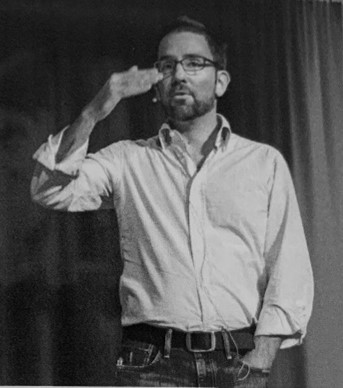
John W. Conklin is the Don D. and Ruth S. Eckis Endowed Professor of Mechanical and Aerospace Engineering, and Assistant Director of the Astraeus Space Institute at the University of Florida. He joined the UF faculty in 2012 after a three-year research associateship at the W.W. Hansen Experimental Physics Laboratory at Stanford. He received his BS and MEng degrees from Cornell and PhD from Stanford in 2009. In 2011, John was the Fulbright Junior Lecturer at the University of Trento in Italy. From 2018 to 2020, he served as Member and Vice-chair of NASA’s Astrophysics Advisory Committee. John has been awarded the NASA Group Achievement Award (2005) for the Gravity Probe B science team, the Balhaus Prize (2009) for best PhD thesis in Aeronautics and Astronautics at Stanford, the Zeldovich Medal (2010) from COSPAR & the Russian Academy of Sciences, the NASA Early Career Faculty Award (2014), NASA’s Nancy Grace Roman Technology Fellowship in Space Astrophysics for Early Career Researchers (2015), the Space Science Award from AIAA (2016) for the Gravity Probe B science team, and the NASA Group Achievement Award (2025) for the LISA Study Team.