Genomics Cohort Training—2025-2026

Summer 2025

Students who needed preparation for their fall matriculation into the program took a summer bridging course DSCC 162: Data Structures in Python with Andrea Cogliatti.

At the end of the summer, students were invited to participate in the annual biomedical hackathon.

Fall 2025

Students participated in 13 credits of coursework. Based on previous feedback, BIO 457: Applied Genomics course is being taken now in the first semester and DSCC 461: Database Systems course has been moved to the third semester of study. During the first semester the students took the following courses:

  • BIO 457: Applied Genomics, Professor Amanda Larracuente
  • DSCC 462: Computational Introduction to Statistics, Professor Anson Kahng
  • DSCC 440: Data Mining, Professor Monika Polak
  • IND 501: SMD Research Ethics, Professor Jonathan Herrington

A pre-program survey was done by Cathy Cerosaletti to assess the cohort’s understanding and experiences and competency with research, ethics, equity and inclusion, genomics and career development skills.

Other events that happened during the semester included:

  • Attending poster presentations by the previous cohort during Meliora Weekend.
  • Connecting with mentors at a mentor meetup.
  • Attending a biotech career panel organized by Professor Justin Fay with panelists from Charles River Laboratories, GenScript, Novo Nordisk, and Calvery Holdings.
  • Attending a bioinformatics career session hosted by the bioinformatics core staff at the Genomics Research Center.

Winter 2026

A sequence of three extra-curricular, hands-on workshops aimed at building core competencies in genomic data analysis were offered by the Genomics Research Center (GRC) in conjunction with the Goergen Institute for Data Science GIDS-REM fellowship program and the Center for Integrated Research Computing (CIRC). These workshops covered nine core competencies were required for GIDS-REM fellows were open to any researchers in the University of Rochester and Medical Center communities.

An introductory session on Monday, January 12 from 10 a.m.-3:30 p.m. by Professor Brendan Mort and staff of CIRC at the Vista Collaboratory in Carlson Library was required for those who needed Blue Hive access or basic knowledge of Linux clusters, running Jobs and Slurm, Modules, Software, and Jupyter.

The workshops were two hours each and led by John Ashton and staff of GRC:

  • Tuesday, January 13: Experimental Design and GRC deliverables. This workshop introduces experimental design considerations in the generation of high throughput sequencing data including RNAseq, ChIP-seq (and related -seq technologies).
  • Wednesday, January 14: Bulk RNAseq. This workshop introduces quality control in bulk RNA sequencing experiments and best practices in RNA seq analysis.
  • Thursday, January 15: Single cell sequencing. This workshop introduces single cell RNAseq and ATACseq data generation and analysis.

Spring 2026

Students returned to studies with 12 credits of coursework taking:

  • DSCC 465: Introduction to Statistical Machine Learning, Professor Cantay Caliskan
  • BST 434: Genomic Data Analysis, Professor Matthew McCall
  • BIOL 453: Computational Biology, Professor Justin Fay

Mentor meetings were used to start discussions about summer internship placements. 

Summer 2026

Students engage full-time in their internships and lab’s research assignments.

Professor Fay will lead the Summer Seminar Series—a weekly venue to learn and engage in applied problems in genomics. The series includes short presentations from students, trainees and faculty on current research problems with an emphasis on pragmatic solutions. Presentations will be followed by a discussion to enhance practical understanding and assessment of genomics approaches, methods and computational analyses. The seminar series will be run as part of the Goergen Institute for Data Science MS program in applied genomics and open to students and faculty interested in application of genomics and genome technologies to problems in biology.

The seminar series will also included a professional development component for students in the GIDS-REM training program. For this component students learn and assess presentation strategies and research communication skills to enhance their career goals in either academics or industry.


Session 1

05/18/25

Evolution and Development

Jennifer Brisson, Professor, Department of Biology

Session 2

06/01/25

Phylogenomics

Mark Hibbins, Assistant Professor, Department of Biology

Session 3

06/15/25

RNA processing

Aiswarya Balakrishnan, Graduate Student, Wagner Lab

Session 4

06/22/25

RNA Biology and Sensory Systems

Gaëlle Talross, Assistant Professor, Department of Biochemistry

Session 5

07/06/25

Repetitive Elements and Chromosome Biology

Jabale Rahmat, Graduate Student, Larracuente Lab

Session 6

07/13/25

Epigenetics of Eusocial Insects

Brendan Farhi, Graduate Student, Glastad Lab

Session 7

07/27/25

Genomic Biomarkers of Aging

Francesco Morandini, Graduate Student, Gorbunova-Seluanov Lab

Session 8

08/11/25

Data Science Careers in Industry

Vincent Fasanello, Senior Risk Assessment Scientist, Bayer

At the end of the summer, students will participate in the annual Biomedical Data Science Hackathon.

Fall 2026

Students enroll in:

  • DSCC 483: Practicum Project, Professors Ajay Anand and Cantay Caliskan
  • DSCC 461: Database Systems, Professor Eustrat Zhupa

Our fellows presented posters about their summer research during Meliora Weekend at the Goergen Insitute for Data Science & AI Open House event.

  • Tasmia Alamgir (Mathews Lab): "Pairwise-HHM Aligmment and Secondary Structure Prediction for Obelisk RNAs"
  • Matteo Goldman (Genomics Research Center): "Bad Neighborhood? Evaluating Spatial Niche Identification Tools on Mouse Leukemia Tissues"
  • Gabrielle Nemer (Gloria Pryhuber MD):Lung-Specific Segmentation and Cell Type Annotation for Mutiplexed Immunofluorescence"
  • Abigail Waryanka (Hibbins Lab): "Effect of Ancesteral Polymorphism in Tumor Phylogenetic Reconstruction"

Conference Travel

Members of the cohort are considering attending the following conferences:

Cold Spring Harbor Labs Biological Data Science Meeting

Practicum Project

Fall presentations will be posted as they become available.
Genomics Cohort 2025-2026

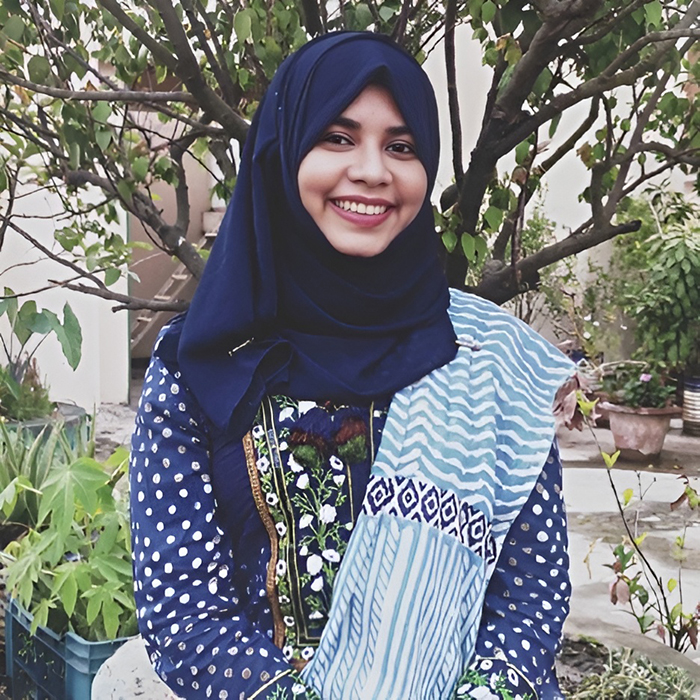
Headshot of Tasmia Almagir.

TASMIA ALMAGIR


HOMETOWN: Dhaka, BANGLADESH (currently Rochester, NY)

UNDERGRAD DEGREE: BS Software Engineering, Shahjalal University of Science and Technology (BANGLADESH), 2020

WHY ROCHESTER: The University of Rochester is a leading institution in multidisciplinary research. In particular, the GIDS-REM curriculum provides a unique opportunity, combining strong support, resources, and mentorship to develop future data scientists. I believe pursuing the Genomics track within Data Science will enable me to build on my current skills and contribute to this dynamic, diverse field.

PREVIOUS EXPERIENCES: Before moving to the U.S., I worked for three years as a software engineer at Pathao, an on-demand digital platform operating in Bangladesh & Nepal. As a software engineer, I’ve seen how data is used to transform business operations and user experiences.

SELECTED MENTORS:

  • Ajay Anand: Data analytics, machine learning, and deep learning for healthcare; Biomedical/ultrasound signal processing, biomedical instrumentation, predictive modeling, time-series analysis
  • Juilee Thakar: Bioinformatics; Systems biology; Dynamic Modeling Tools

SUMMER INTERNSHIP: I joined the Mathews Lab in the Department of Biochemistry and Biophysics, led by Professor David H. Mathews. My research focused on Obelisks, a newly discovered type of circular RNA, where I worked on developing a circular RNA alignment method using pairwise Hidden Markov Models (HMMs), with the goal of extending TurboFold II for RNA secondary structure prediction.

HOW THE PROGRAM TRANSFORMED ME:

  • After 1st Semester: "The program helped me build a strong foundation in data science through courses like Computational Statistics and Data Mining, while Applied Genomics introduced me to the computational side of modern genomics. Coming into the program, I had limited experience connecting these two fields, but by the end of the first semester, I had started to see how data science could be used to solve complex biological problems. This shift in perspective made me more confident in my analytical skills and motivated me to explore research at the intersection of data science and genomics."
  • After a Year: "I have developed a deeper understanding of how modern genomics problems can be addressed more efficiently using data science tools and techniques. I gained practical knowledge of genomic data analysis and computational biology, which proved especially valuable during my summer internship. Over the past year, I have become more confident and enthusiastic about tackling complex biological problems. Most importantly, this experience has changed my perspective on how data science can help uncover meaningful biological insights and contribute to future research."

FUTURE PLANS: My long-term goal is to become a data science professional specializing in optimizing software systems and developing intelligent solutions, primarily in the healthcare sector. I look forward to applying my technical skills in a new direction within the health sciences.

LinkedIn Profile
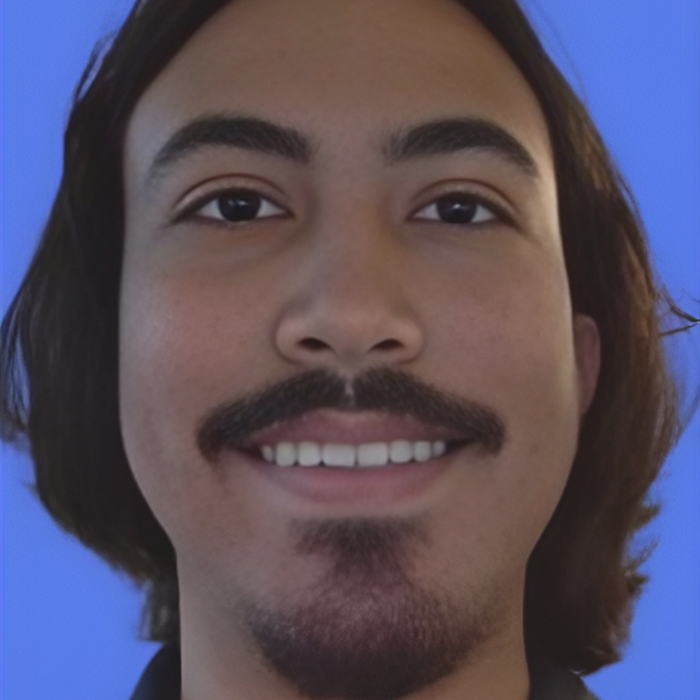
Headshot of Matthew Goldman.

MATTHEW (MATEO) GOLDMAN


HOMETOWN: Miami, Florida

UNDERGRAD DEGREE: BS Biological Sciences from Florida International University, December 2024.

WHY ROCHESTER: This program had made clear its dedication to building an academic environment that makes genomics accessible to students from diverse backgrounds. I wanted to be part of a community that combines not only has rigorous training and research opportunities but also is complete with a culture that equally prioritizes mentorship and equity.

PREVIOUS EXPERIENCES: As an undergraduate researcher in the Laboratory of Tropical Genetics, I collaborated on projects investigating mosquito genetics and immunology through the study of transposable elements. This experience inspired me to pursue graduate study to integrate my passion for biology with the analytical and technical skills of bioinformatics.

SELECTED MENTORS:

  • Caitlin Dreisbach: Use of quantitative methods to make better clinical assessments during pregnancy
  • Dragony Fu: Biological functions of RNA modifications, Human disorders linked to RNA modifications, Regulation of protein synthesis

SUMMER INTERNSHIP: As a Bioinformatics Intern at the Genomics Research Center, I worked in a core facility, which gave me experience in a setting that blends academic research with an industry-style service model. I analyzed high-dimensional spatial transcriptomic data from various spatial platforms, including Illumina StrataMap, 10x Genomics Xenium, and Visium HD, in a mouse cancer model across multiple tissues during disease progression. I also benchmarked spatial niche-identification tools in Python and R to establish tool-selection guidelines and parameter recommendations, built a reproducible analysis environment using a customized container, and documented my analyses so they can guide the Center's future advice to investigators.

HOW THE PROGRAM TRANSFORMED ME:

  • After Semester 1: "The program gave me a strong foundation in programming, statistics, and data science that I did not have as a biology student. I can now better approach biological questions by thinking about how computational tools can help answer them."
  • After Year 1: "Over the past year, I have moved from learning foundational skills to applying them independently to real research problems, most recently through my spatial transcriptomics work at the Genomics Research Center. The program has given me the confidence to bridge biology and data science and to see myself as a bioinformatician."

FUTURE PLANS: I plan to build the foundational technical and research skills necessary to pursue a doctoral program. My broad research interest is in studying human genomic diversity to address inequities in healthcare, and I am looking forward to the mentorship and research experiences this program provides, helping me sharpen this interest.

LinkedIn Profile
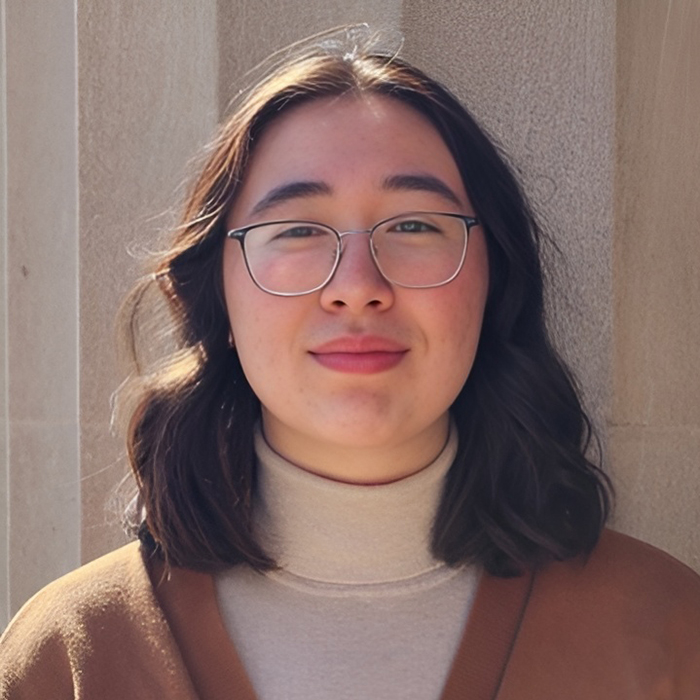
Headshot of Gabrielle Nemer.

GABRIELLE (GABBY) NEMER


HOMETOWN: Albuquerque, NM

UNDERGRADUATE DEGREE: BS in Biology: Computational Biology from the University of Rochester, Phi Beta Kappa, 2025

WHY ROCHESTER: As someone with a biological science background, the GIDS-REM curriculum blends my interests in genomics while improving my technical skills. The close mentorship and focus on research provide the support I need to grow professionally and explore diverse research areas.

PREVIOUS EXPERIENCES: Besides my undergraduate degree, I’ve done research experience in neuroscience and biology at UNM Health Sciences Center as well as at the University of Rochester with Professor Larracuente. My volunteer experiences at the hospital and as an EMT taught me the importance of medicine and biomedical research. Despite advances in medicine, many genetic and epigenetically influenced conditions remain unmanaged.

MENTORS:

  • Paul Boutz: Implement a multi-disciplinary approach that includes molecular biology, genomics, bioinformatics, and state-of-the-art genome engineering to understand the essential roles of RNA processing in normal and tumor cell physiology, and to uncover the molecular mechanisms by which drugs alter gene expression.
  • Seong-Hwan Jun: Bayesian models and computation; Probabilistic machine learning; Graphical models; Statistical inference for combinatorial problems; Statistical methods for analysis of single cell transcriptomics data; Multi-omics data integration; Cancer genomics; Cancer-immune interaction; Phylogenetics

FUTURE PLANS: I want to pursue more education to contribute to research in genomics related to the health sciences. In the future, I want to work on genomics research that focuses on disease risk assessment or tailored treatments.

Linked In Profile
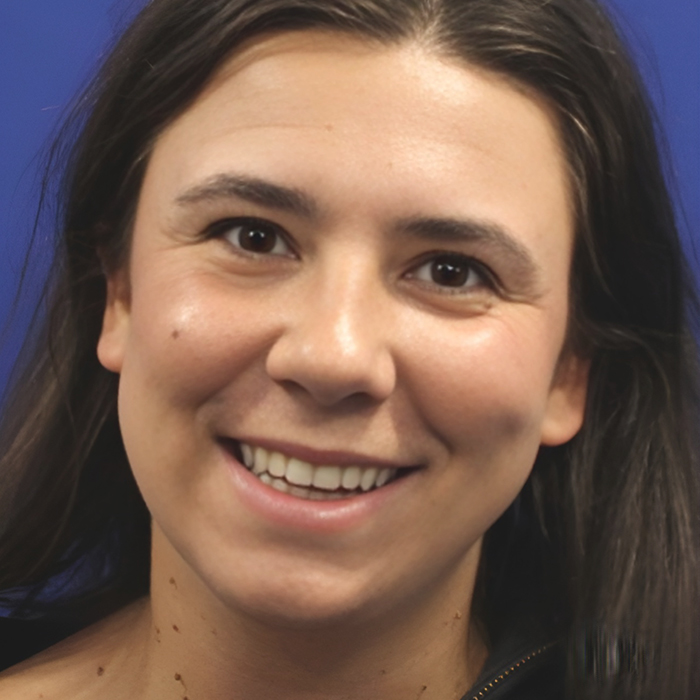
Headshot of Abigail Waryanka.

ABIGAIL WARYANKA


HOMETOWN: Pittsburgh, PA

UNDERGRAD DEGREE: BS Biology with honors; BS Computer Science; Allegheny College, Magna Cum Laude, 2023

WHY ROCHESTER: I chose Rochester because of its curated curriculum aimed at building the tools necessary to work in the genomics field. Additionally, the research and personal mentorship qualities provide invaluable support for future career development.

PREVIOUS EXPERIENCES: I graduated from Allegheny College in 2023 with a degree in Biology and Computer Science. My senior honors thesis was titled: DEG-PI, A Computational Tool that Identifies Differently Expressed Genes and Enriched Pathways in Cancer Tissues.

MENTORS:

  • John Ashton: Cancer biology, specifically leukemia stem cell (LSC) biology
  • Darren Carpizo: Cancer biology with an emphasis on developmental therapeutics. Employ a variety of experimental systems including mouse cancer models, patient derived tissues as well as therapeutic clinical protocols.

FUTURE PLANS: Pursue a career studying genetic mutations. I believe that data science plays a critical role in understanding how mutations disrupt biological pathways and contribute to the development of complex diseases. By analyzing large-scale genomic data, I hope to uncover patterns that reveal the molecular mechanisms behind breakdowns.

LinkedIn Profile

Past Genomics Cohorts